Introduction: Decoding the GPA Mystery
The difference between **Semester GPA (SGPA)** and **Cumulative GPA (CGPA)** is often confusing for students. Many wonder: Is my GPA for this semester the same as my overall GPA? Why is my CGPA typically lower than my best semester? This guide clarifies both concepts, explains their calculation, and details why both metrics are essential for tracking progress toward goals like graduation, academic eligibility, and competitive college admissions.

Section 1: What is a Semester GPA (SGPA)?
Measuring Short-Term Performance
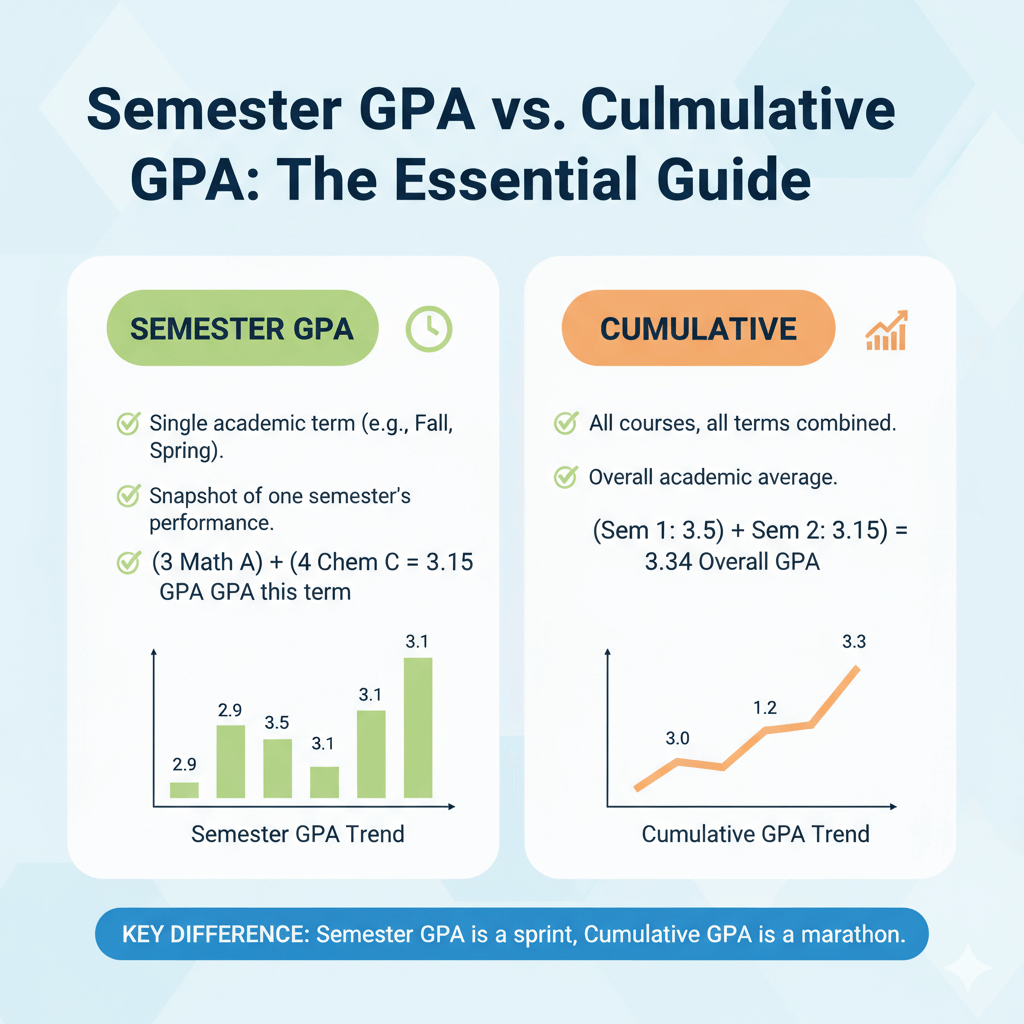
Your **Semester GPA (SGPA)** is the average of your grades for a single, specific term (e.g., Fall, Spring, Quarter). It provides a snapshot of your performance in that grading period alone. This metric is crucial for checking short-term eligibility for activities or scholarships.
SGPA Calculation Example (Fall Semester)
Assuming a standard 4.0 unweighted scale where A=4.0, B=3.0, C=2.0.
| Course | Grade | Grade Point | Credit Hours | Quality Points (Point $\times$ Credit) |
|---|---|---|---|---|
| Math | A | 4.0 | 3 | 12.0 |
| English | B | 3.0 | 4 | 12.0 |
| History | C | 2.0 | 3 | 6.0 |
| Chemistry | A | 4.0 | 3 | 12.0 |
The Semester GPA for the Fall term is 3.23.
Section 2: What is Cumulative GPA (CGPA)?
The **Cumulative GPA (CGPA)** is the average of all your semester GPAs combined, from your very first term to your most recent one. It represents your overall, long-term academic record and is the score most frequently requested by colleges and employers.
CGPA Calculation Example (After Two Semesters)
Using the previous Fall GPA of 3.23 (13 credit hours, 42 QPs) and a strong Spring GPA of 3.75 (15 credit hours, 56.25 QPs):
| Semester | GPA | Credit Hours | Quality Points |
|---|---|---|---|
| Fall (Prev.) | 3.23 | 13 | 42.00 |
| Spring (Current) | 3.75 | 15 | 56.25 |
The Cumulative GPA (3.51) is a blended score, reflecting the strong Spring performance offset by the lower Fall performance.
Section 3: Key Differences and Why Both Matter
Core Distinctions
| Feature | Semester GPA (SGPA) | Cumulative GPA (CGPA) |
|---|---|---|
| Time Period | One semester only (Short-term) | All semesters combined (Long-term) |
| Focus | Current improvement/decline | Sustained academic record |
| Effect on Score | Volatile; changes drastically each term | Stable; takes many credits to change |
| Primary Use | Scholarship/Probation checks | Graduation/College Admissions |
The "Progress Report" vs. "Academic Transcript"
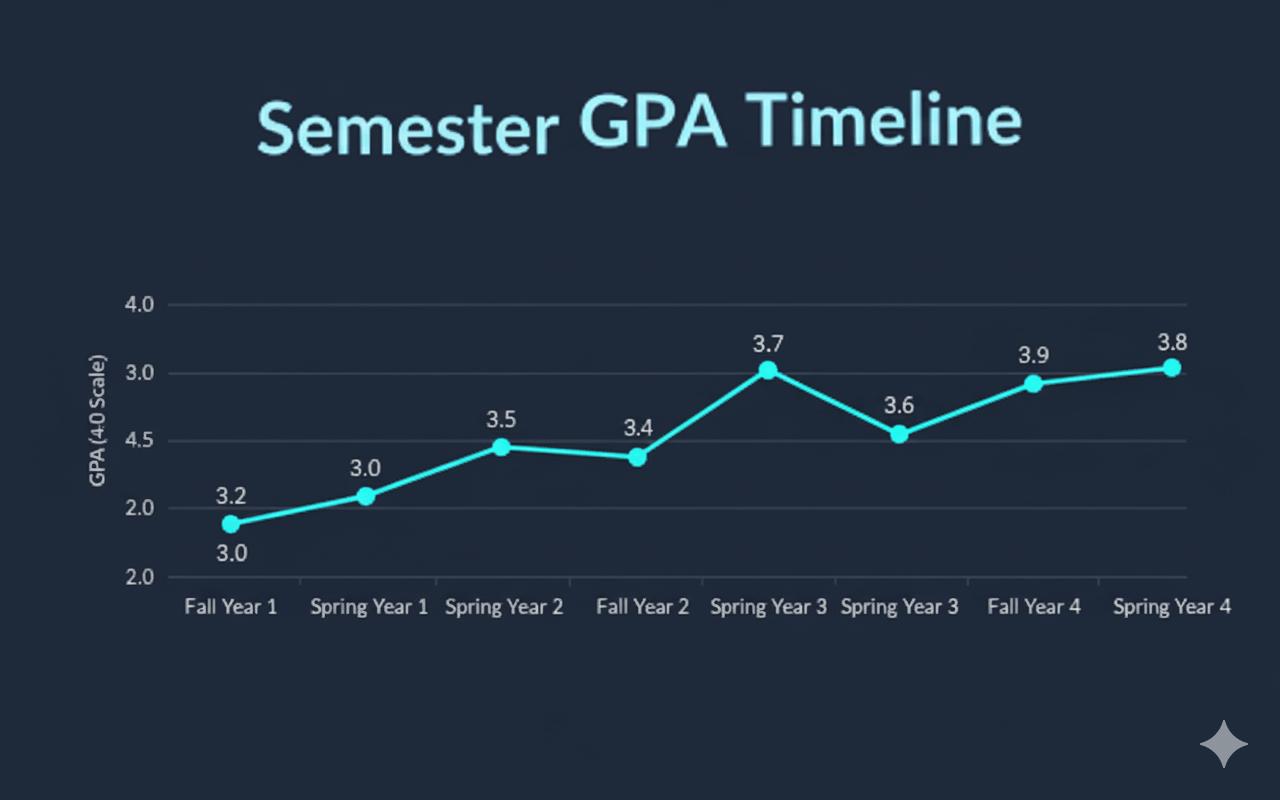
Think of your **SGPA** as a **progress report**—it gives immediate feedback on your recent effort. If you have a poor semester, a high SGPA in the next term can show a great turnaround. However, the **CGPA** is your **official academic transcript** and carries the most weight in high-stakes situations:
- College Admissions: Universities (like UT Austin, LSU, and others) primarily look at the CGPA as a holistic measure of sustained effort over multiple years.
- Graduation Eligibility: Final CGPA is the determining factor for graduating with honors.
- Job Applications: Most employers and graduate schools will ask for your final CGPA.
Conclusion
In summary, while a strong **Semester GPA** proves you're capable of achieving academic excellence in any given term, your **Cumulative GPA** is the single most important score, reflecting the consistency and depth of your academic record. Keep track of both, but focus on continually improving your SGPA to positively influence that all-important CGPA over time.
CTA: Need to calculate how your latest grades impact your overall score? Use a comprehensive GPA calculator to see your true academic standing!
Core GPA Formulas

SGPA vs. CGPA at a Glance
| Metric | Time Frame | Key Use |
|---|---|---|
| SGPA | 1 Term/Semester | Progress Report |
| CGPA | All Terms | Official Transcript |
Why CGPA is Hard to Change
The Cumulative GPA is an average of all credits taken. If you have 60 credit hours recorded, a single bad grade only affects a small fraction of the total points. This is why it takes a sustained effort over several semesters to significantly raise a Cumulative GPA.