Introduction: Decoding the GPA Mystery
If you’re in high school or applying to college, you’ve probably heard terms like **weighted GPA** and **unweighted GPA**. This system can be confusing: Why do some students have GPAs above 4.0? Which one matters more? This guide will clarify the concepts, explain the calculation methods, and detail which GPA matters most for competitive college admissions at institutions like **UT Austin**, **Purdue**, **Auburn University**, **LSU**, and **UC Berkeley**.

Section 1: What is an Unweighted GPA?
The Standard 4.0 Scale
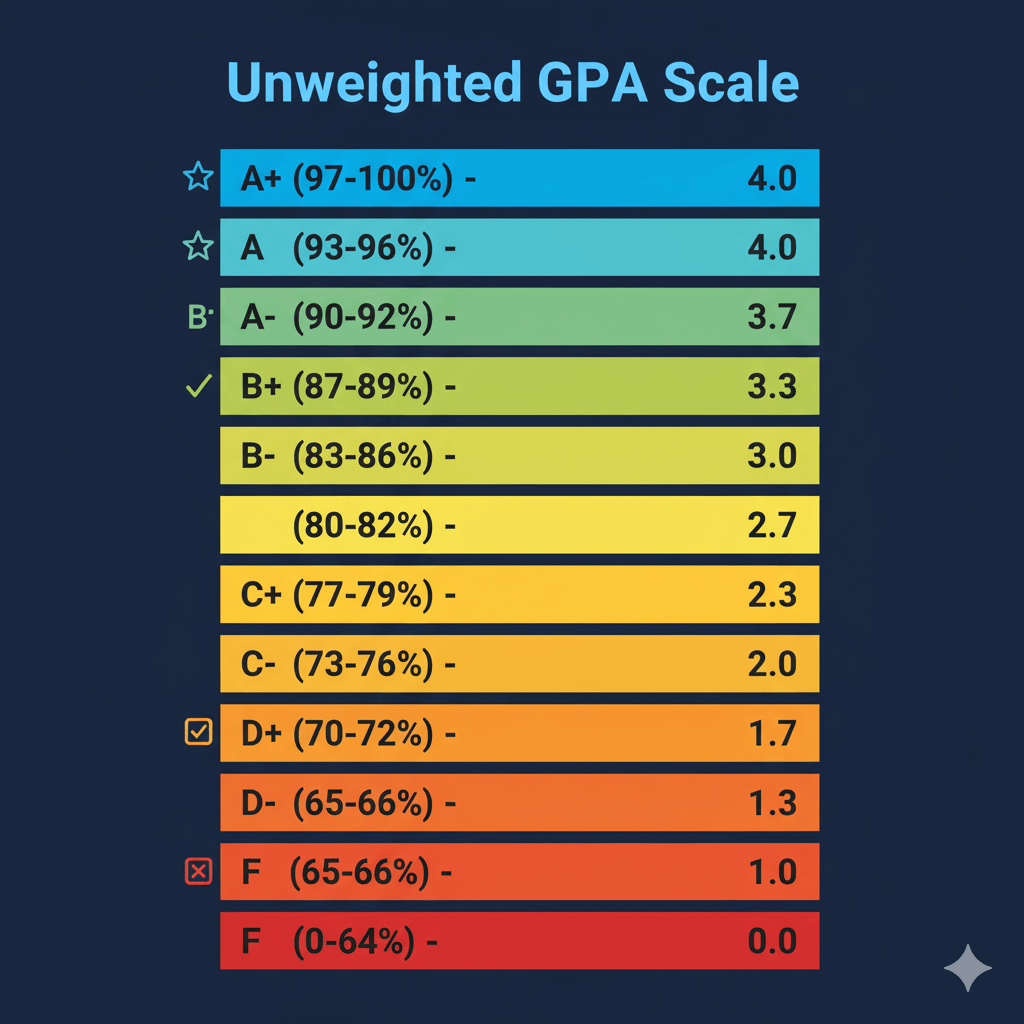
An **Unweighted GPA** is the standard scale used by most schools. It's strictly based on a **4.0 scale**, without taking into consideration the difficulty of the course. This system provides a consistent measure of raw academic performance across all subjects.
Unweighted GPA Scale Example (4.0 Max)
| Letter Grade | Grade Points | Percentage Equivalent |
|---|---|---|
| A | 4.0 | 90–100% |
| B | 3.0 | 80–89% |
| C | 2.0 | 70–79% |
| D | 1.0 | 60–69% |
| F | 0.0 | Below 60% |
Example: An A in AP Biology (4.0) is treated the same as an A in Regular English (4.0).
Section 2: What is a Weighted GPA?
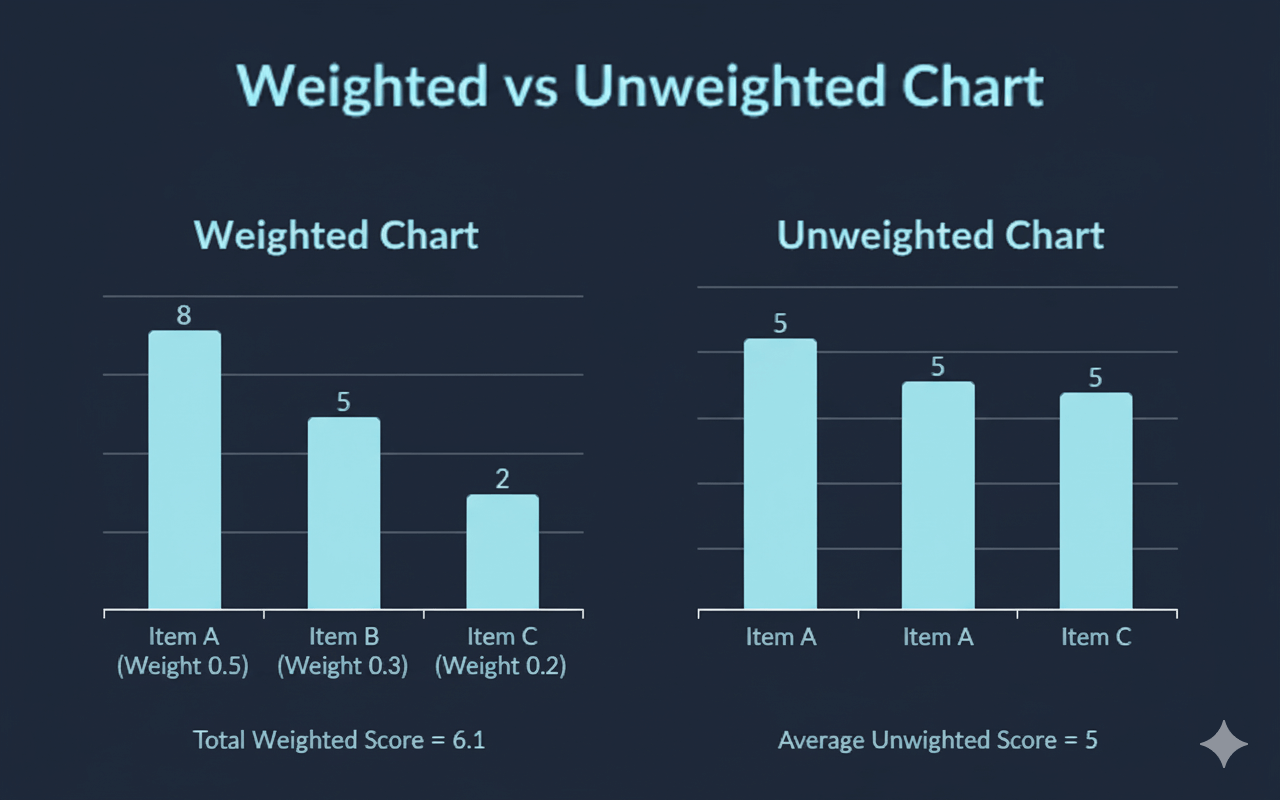
A **Weighted GPA** gives bonus points to students for enrolling in more challenging classes (typically **AP, IB, or Honors**). It's usually reported on a **5.0 or 6.0 scale**. This is the only reason a student’s GPA can exceed 4.0.
Weighted GPA Scale Example (5.0 Max)
| Course Type | A Grade Points | B Grade Points | C Grade Points |
|---|---|---|---|
| Regular | 4.0 | 3.0 | 2.0 |
| Honors | 4.5 | 3.5 | 2.5 |
| AP / IB / Advanced | 5.0 | 4.0 | 3.0 |
Example: An A in AP Biology (5.0) earns a full bonus point over an A in a Regular course (4.0).
Section 3: Weighted vs. Unweighted GPA Calculation
Let's calculate both scores for a student who took 4 courses to see the impact of weighted grading:
- Course 1: AP Biology (Grade: A)
- Course 2: Honors English (Grade: B)
- Course 3: Algebra II (Grade: A)
- Course 4: History (Grade: C)
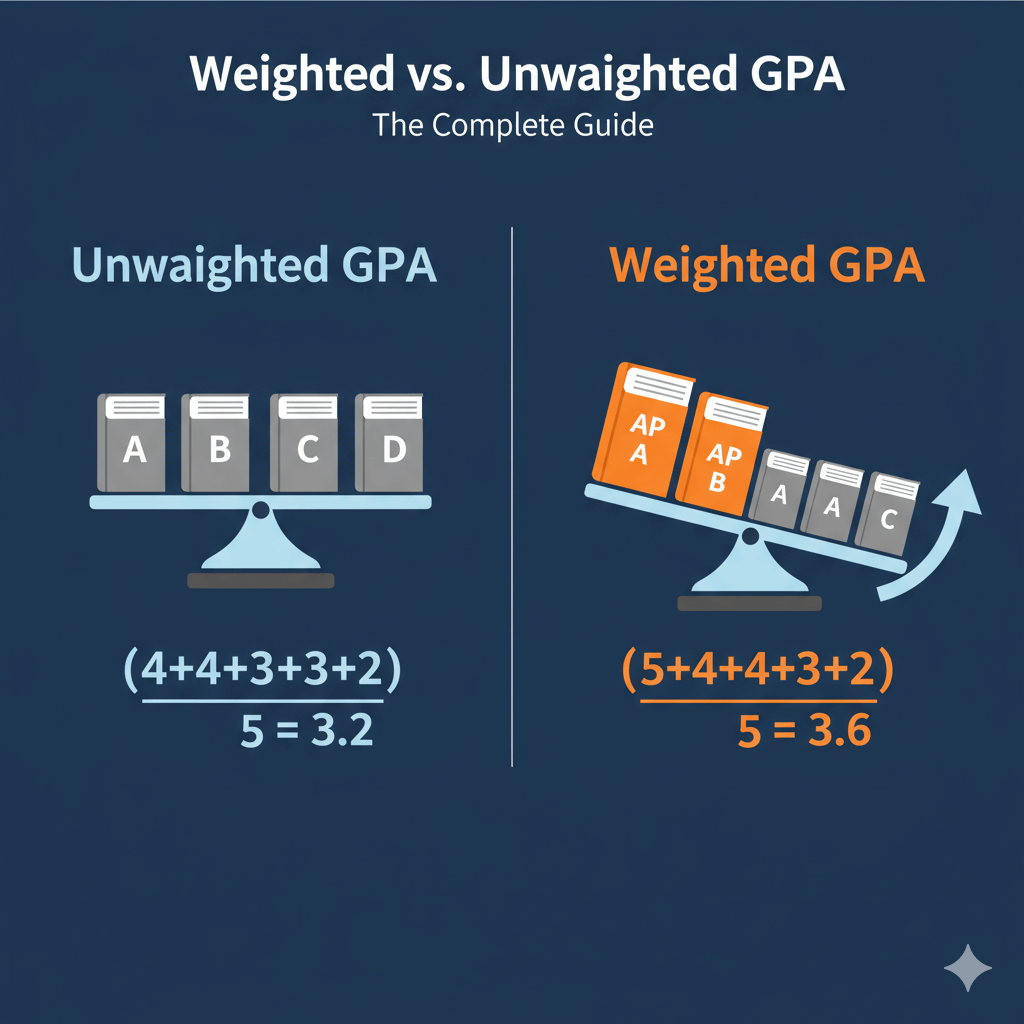
Unweighted GPA Calculation
Weighted GPA Calculation
Result: The Weighted GPA (3.63) is significantly higher than the Unweighted GPA (3.25), reflecting the student's challenging course load.
Section 4: Key Differences & Academic Incentive
Schools use the weighted system for two primary reasons:
- Incentivize Challenge: Weighted GPA encourages students to take **AP/IB courses** rather than shying away for fear of jeopardizing a 4.0.
- Distinguish Performance: It provides a metric that distinguishes students who push themselves from those who stick to the minimum required curriculum.
- Assist Competitive Admissions: It clearly communicates the academic rigor to selective universities.
Summary of Differences
- Scale: Unweighted is always 4.0 maximum; Weighted is 5.0 or higher.
- Course Difficulty: Unweighted does not consider difficulty; Weighted grants bonuses for advanced classes.
- Purpose: Unweighted shows base performance; Weighted shows commitment to academic challenge.
Section 5: College Admissions Perspective
Admissions officers at institutions like **UC Berkeley** and **UT Austin** consider both GPAs, but often in a nuanced way. The majority of competitive colleges will **recompute your GPA** using their own internal, standardized method to compare applicants fairly.
How Admissions Officers Evaluate GPA
- Unweighted GPA (Consistency): Used as a baseline for raw academic ability across all applicants.
- Weighted GPA (Rigor): Used to measure the level of challenge you undertook.
A common scenario: A student with a **3.8 Unweighted GPA** but a **4.4 Weighted GPA** is a stronger candidate than one with the same 3.8 Unweighted GPA but only a 3.9 Weighted GPA (indicating fewer advanced classes).
Conclusion
Both weighted and unweighted GPAs provide essential information about your high school performance. While the unweighted score shows your foundational success, the weighted score is a key indicator of your willingness to challenge yourself—a trait highly valued by competitive colleges. Focus on challenging yourself with AP, IB, or Honors courses where possible to maximize your weighted score.
CTA: Use a cumulative GPA calculator to track your official and weighted scores for college readiness!
GPA Formula & Scales
 class="w-full h-auto rounded-lg shadow-md">
Standard 4.0 (Unweighted) Scale
| Grade | GPA | Percent |
|---|---|---|
| A | 4.0 | 90-100% |
| B+ | 3.3 | 87-89% |
| B | 3.0 | 80-86% |
| C+ | 2.3 | 77-79% |
| D | 1.0 | 60-69% |
5.0 Weighted Scale (A Grade)
| Course Type | Grade Points (A) |
|---|---|
| Regular | 4.0 |
| Honors | 4.5 |
| AP / IB | 5.0 |